
Hybrid Work
Arrangement
Set your hybrid work policy and compare how different strategies might impact employee productivity and retention.
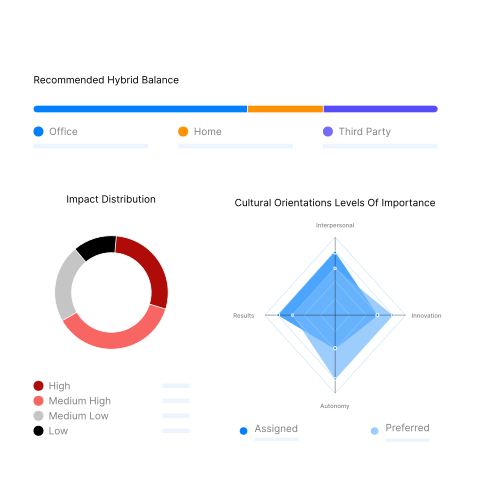
Find The Right Balance
Determining the ideal mix of in-office and remote workdays is crucial but comes with trade-offs. Balancing these factors ensures organizational success and employee well-being.

Office Space
More in-office days requires larger spaces

Satisfaction
Flexibility impacts employee happiness

Environment
Fewer in-office days reduce CO2 emissions

Commutes
More in-office days leads to more commute time

Talent
Hybrid policies impact recruitment appeal

Productivity
Hybrid policies facilitate collaboration and focus
Optimize Hybrid Work At Every Level
Receive tailored recommendations for the ideal hybrid work setup—adapted to individuals, teams, departments, or the entire company.
- Identify misalignment between employees' cultural preferences and management goals.
- Shift in-office days to distribute attendance throughout the week and increase collaboration.
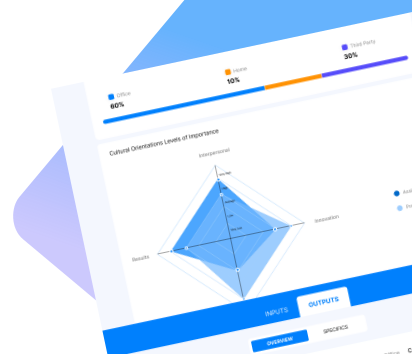
Remove Hybrid Work Obstacles
Uncover what is preventing your organization from achieving the ideal hybrid work balance including:
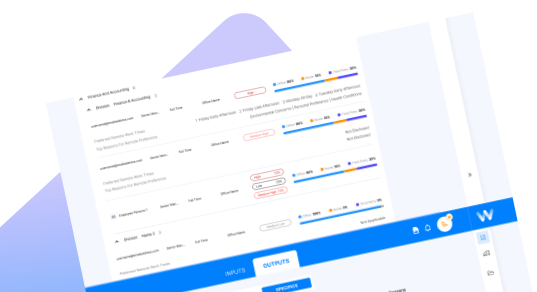
- Individual employees' remote work reasons, such as office location constraints, caregiver responsibilities, etc.
- Identifying individuals who may be adversely affected if their remote work preferences are not considered.
Compare Hybrid Work Scenarios
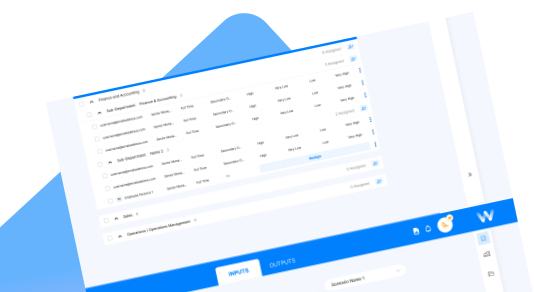
Compare hybrid work scenarios to assess their impact on your workplace and workforce, including:
- Morale, engagement, and retention
- Alignment with employee cultural preferences
- Productivity and performance outcomes
Feature Summary

Hybrid Work Recommendations
- •Per location, department, individual
- •Preferred remote work days and times
- •Impact of remote preferences productivity per employee
- •Top remote work reasons per employee
- •Cultural orientations (alignment / gaps)
Unlimited Simulation Capabilities
- •Workplace value per employee
- •Workplace enablement scores
- •“To be hired” employees
- •New offices, scenarios and cultural objectives
Mobility Profiles BI Tool
- •Key characteristics of the three primary employee mobility profiles: anchored, hybrid, and remote.

We 💙 Workplace Science
Just like society as a whole, Workplaces are intricate ecosystems, where even small changes can have significant effects. That’s why our solutions are built on insights from behavioral science and industry expertise. Learn more about the science behind Workplaced to discover how we are able to deliver tailored, actionable recommendations for your business.